Earth Day, 2026

I just came off an interview with WESN about my latest tribute to the Main Ridge Forest Reserve, during which I was asked about the various birding sites on Tobago, and the threats faced by the flora and fauna of the island. That got me going on the disproportionate effects of climate change – the well-known phenomenon of small-island states like Tobago bearing the brunt of warming seas and irregular weather despite not being a major contributor to the carbon emissions that are driving the climate emergency. Which, in turn, stirred further ponderations on interconnectedness, and how we continue to fail to perceive this.
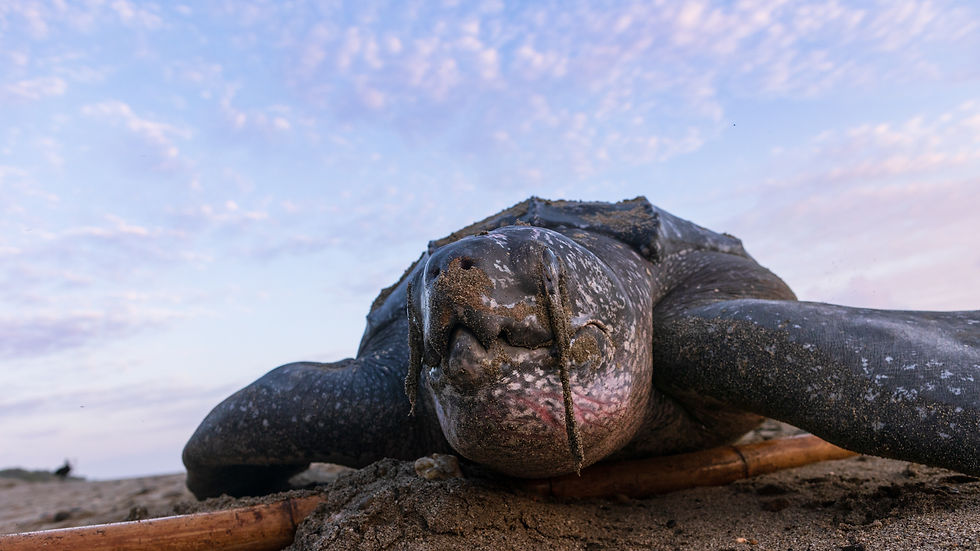
To understand where we are headed, we need to know where we have come from, and whether any recalibration is needed. I began my professional conservation journey without any inkling of income – there was only an understanding that things were in a much more dire state thirteen years ago as opposed to thirty years ago (the interplay of thirteen and thirty is proving to be a bit more contentious than intended, but more on that later), and this was instrumental in catapulting me out of a lucrative career in the excessively extractive petrochemical industry.
There was no blueprint, only an urgency that wild spaces needed to be protected at all costs. I began trying to sway minds with my photography, which later evolved into the plethora of conservation-minded activism that underpins all of my work. By far the heaviest-hitting of the bunch is ecotourism, which, by virtue of its economic weight, is most likely to command the audience of the decision-makers. It is a double-edged sword and one that I have mixed feelings towards, as getting to a destination carries with it a significant carbon footprint. I try, however, to ensure that monies go directly toward local people and conservation efforts in the countries where I'm taking people – and profit-gouging corporations are avoided as much as possible. In places where there is a robust national park system, fees directly fund the salaries of rangers. Where there are private landowners, ecotourism provides a worthy incentive to keep their lands in a wild state. Responsible establishments like restaurants and bean-to-bar chocolatiers always see my clients.
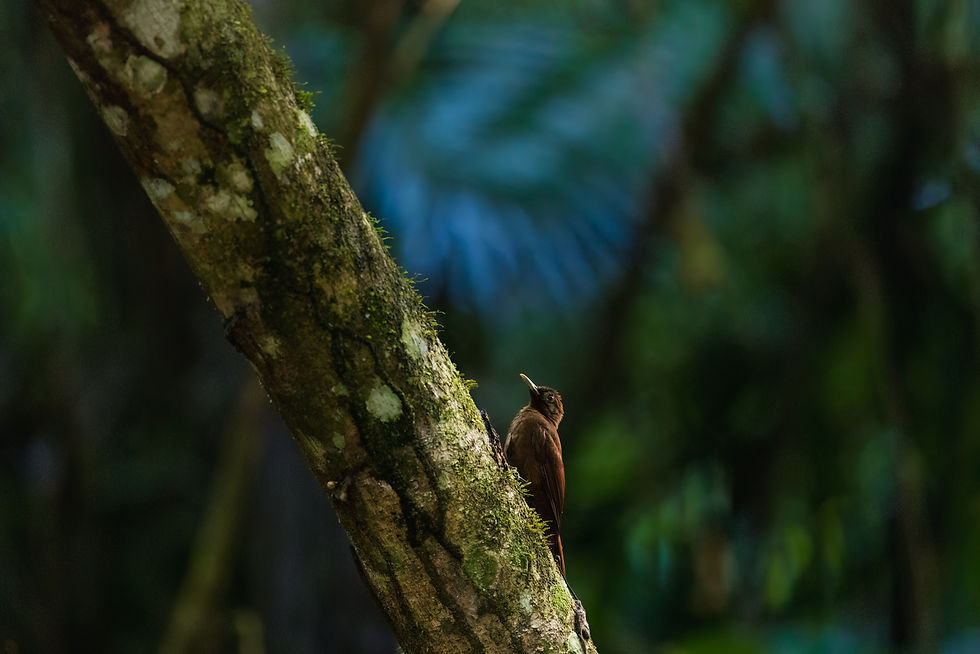
All this is to say that we should be doing all that we can, it is a slippery slope to get caught on when we begin to think of wider issues that are beyond our reach. It is unlikely that we can stop a war if we act individually, but if we all begin to inspect how we have gotten to this point, therein lies the glimmer of hope for humanity.
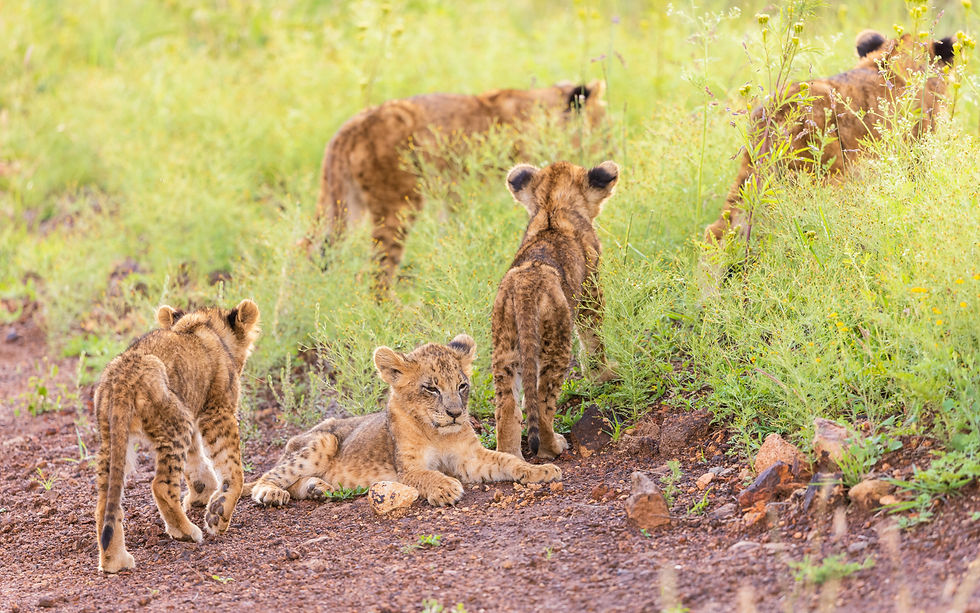
Within the environment of human interaction with the swiftly diminishing wild spaces left on this planet, we would notice that there are specific areas that are described as "reserves" – most often these areas were declared off-limits to harmful practices in order to serve some level of selfish interest. Even the declaration of the Main Ridge Forest Reserve on the 13th April, 1776 – not the 30th April as the Tobago House of Assembly now claims – was for the rainforest's role as a provider of water for the surrounding estates. Furthermore, much of the reserves on the African continent were declared for the purpose of hunting. Not for the African people to hunt, of course, but for aristocrats, celebrities, and other elites to freely enjoy the spoils of what remained after decades of European shelling in the 19th and 20th centuries that resulted in the precipitous decline of most African wildlife. Subsistence hunting by tribespeople was criminalised, yet trophy hunting lives on. This is not dissimilar to the period immediately following the abolition of slavery in the Caribbean, when vagrancy laws were introduced to punish non-estate owners for experiencing leisure. This mindset is pervasive, even entering our lexicon – think of the concept of "immigrant" versus "expat": one is chosen over the other depending on the country of origin of the worker. American workers in the Caribbean are always expats, but Caribbean workers in the USA are always immigrants.
It is therefore entirely necessary for us to inspect this mindset that has found its way into every facet of our lives. From viewing a forest as a collection of trees to who we call "terrorists" – our minds have been soiled by people we don't care to know, by people who never held our interests dear.
These colonial shackles are not rusted and worn after all, in fact by virtue of our actions it seems as though we willingly continue to grease and shine them. We continue to adopt separatism through accepted systems such as academia and religion, and accuse our fellow living beings of nefarious acts and intentions without evidence. We continue to view our precious planet through a myopic, economic lens, when it existed for much longer than any concept of wealth.
Pointing fingers to a particular period in history, or to a particular set of people, is certainly counterproductive. It is our problem, and it is our responsibility to dismantle the barriers that currently stand between us and a stable future. These barriers stem from a desire for wealth – and it is this same desire that stirred the beginnings of imperialist conquest, hundreds of years ago. Colonialism and its associated ills of conquest and erasure is not the problem, by this logic, but another symptom of it. We need to dig deeper, and come to realise that material wealth in itself forms a significant part of the root of the problem.
It is widely accepted that the richest people on the planet are responsible for the majority of the emissions, but what is likely to happen if we remove these ultra-rich from the planet? Surely, there are millions of people waiting in the wings, ready to take their place. Give almost anyone the opportunity to be a trillionaire and they're likely to accept the position without question. The wealth ladder as some term it is a hallmark of a capitalist system that is built upon extraction from the resource-rich countries of the global south: this is the means by which the people of these prolific lands have been systematically denied access to their own resources, and most often made to help extract these resources to be shipped abroad.
Surely, the same thing happens in ecotourism. I was reading in interview with an international birding guide recently, in which she was asked to dispense some advice for anyone seeking to explore a career as an international birding guide. She responded with suggestions of volunteering at a local bird club, and meeting people in the sector. For anyone reading this in the global south, you'd be equally appalled as I was. The job opportunities as an international birding guide are there, without doubt, but the road to get there is not the same for everyone. If you are in disagreement with this, have a look at any of the major birding companies, and see who are their international guides. They are virtually all from places of privilege, also known as the global north.
The point of including these supposed disparate points is to draw parallels between them. Just as underpaid miners in the Congo help to make tech bros richer, so too do village guides dole out local sightings – resources – that help to funnel wealth out of tropical countries into international tour companies. Capitalist ethos: the siphon is a one-way path, and very often multiple siphons end up in the same place. Wealth is a funny thing, as it can only be created by denying someone else what is rightfully theirs.
There is economic hope, however, but it lies in taking example from the natural world. Currently, our situation is borne of a carefully delineated, linear system, whereas all systems in nature are not only inextricably linked, but circular. There are people who are pushing for a wider acceptance of the circular economy, and this is good news. In our individual lives, we must also strive to recognise the links before us. These bonds are across physical space, as well as time.
I mentioned academia earlier; the foundations of our education system need to reflect a unified system as opposed to different subjects that each progress along their own separate lines, further graded according to a linear performance system. History, for example, cannot be separated from disciplines like science and geology. If we understand that the human lifetime is not the prime example of a "long time", then we stand a far better chance of being able to fathom a river, a forest, a planet, as a living being.
And yes, I am writing this from a laptop that was built on extraction, but I am using the available tools to communicate this message – one which I wish I didn't have to in any event. I can lament further, and wish that the people who knew of the ill-effects of our lifestyles in the previous century acted on their understanding. I now understand that capitalism as a global economic framework rewards those who are ruthless and often morally bereft as opposed to those who are kind and generous, and that it is a system built on hatred, one that is dependent upon masses of people that are governed by fear.
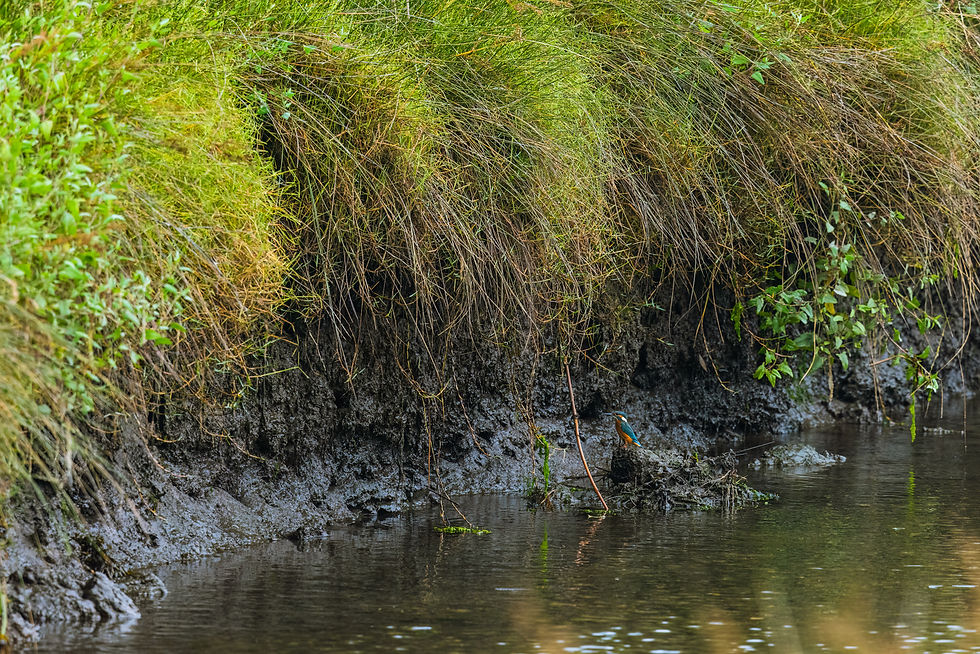
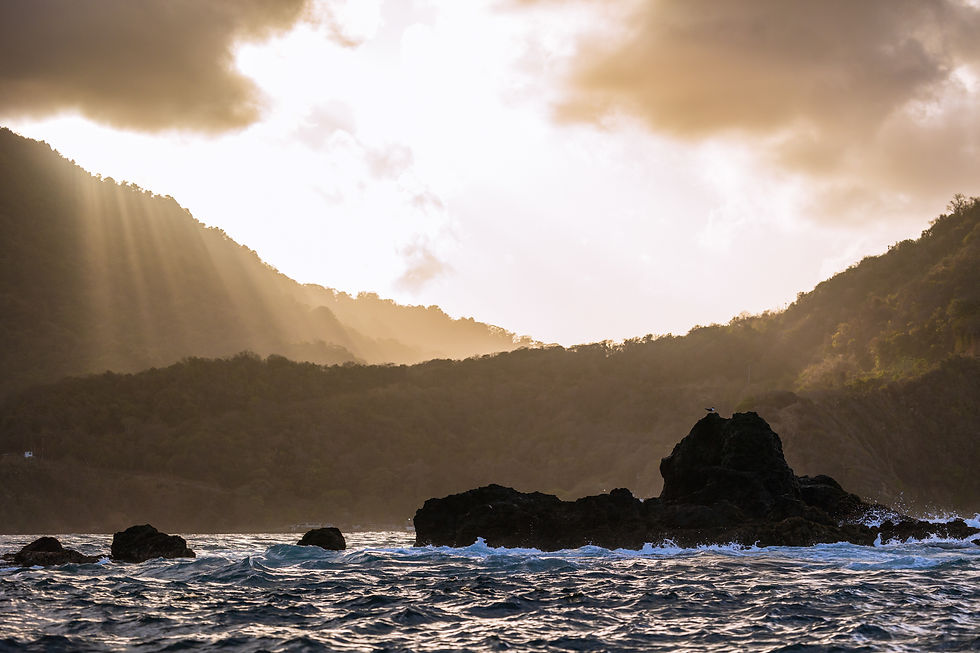
So this Earth Day, while it can often feel like a meaningless charade, a 24-hour period of ChatGPT-crafted corporate social responsibility speeches and vacant promises of a better world, let us turn our eyes and hearts outside. Let us allow ourselves to be moved by the sound of wind through the leaves, or a splash of salmon across the sky for this evening's sunset. Let us take the time to be still, and to resist the pull of notifications and the unspoken pressure to always be doing something – let us allow ourselves to be, in the present, alongside all other living beings in the perceptible and imperceptible.
I refuse to wish you a "Happy Earth Day", as this would imply closure – and this is certainly not a time to close this chapter.

Comments