The Magic of Hummingbirds

Time is the unerring force in our lives, we think of it as definitive, absolute, and regular. We view time as the ultimate measuring stick, rigid, unfeeling, and universal. Hummingbirds, therefore, must operate in millisecond intervals, their lives tragically short according to our yardstick. But what is it truly like to exist in the hummingbird world?
We see them making split second decisions, avoiding collision at the final moment. They do things that are simply too swift for our brains to process. Within the time it takes for the lunar cycle to come full circle, a naked hummingbird hatchling grows into its full size, a gleaming gem of the jungle. Blood is pumped through their tiny bodies at numbing speeds, their metabolism surges like a thousand-horsepower engine being revved by a heavy-footed driver. Yet when on approach to a flower so delicate the wind may tear it from its stem, there is enough time to be deft and careful, ensuring the flower remains in place for a subsequent feeding.
Hummingbirds spend almost the entirety of their time under the sun in the pursuit of food. Every day, a single hummingbird would penetrate thousands of flowers, beating its wings innumerable times while flying unmeasurable distances - it is the only bird capable of powered flight in any direction, including backwards and upwards. For a diet consisting mostly of nectar supplemented by miniscule flying insects and minerals directly from the earth, hummingbirds seem to always be running out of fuel - but never out of time. Hummingbirds never spend effort to visit a flower that has already been visited - except if it has been given sufficient time to replenish its supply of nectar. This surely is a major factor influencing their desire to claim ownership over a patch of flowers, as their memory map likely caters for their own browsing history and not others’.
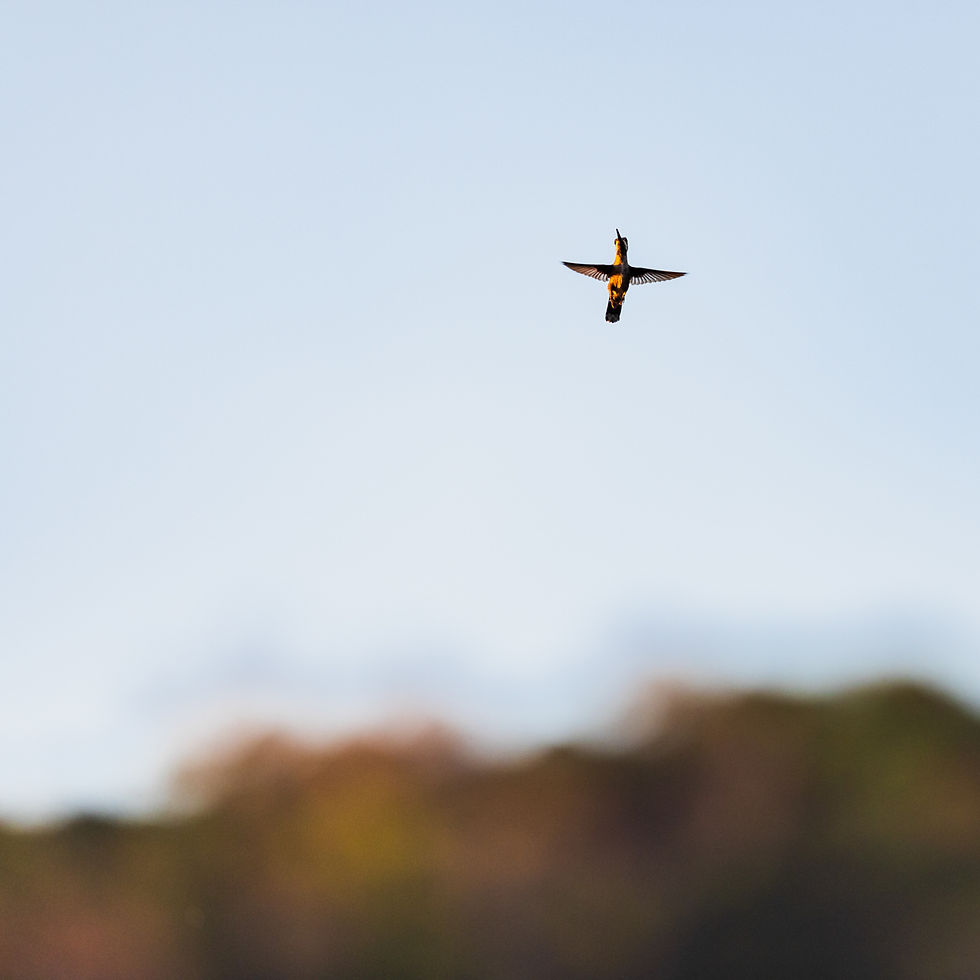
Once shadows begin to lengthen there is an urgency among hummingbirds. With the sun already lower than the canopy and falling quickly, feathery flashes become more fervent. There is no rest, preening, or stretching during daylight’s final flourish. Wings and muscles work overtime, frenetic tongues dart in and out of tired corollas. Hummingbirds have poor vision in the dark, and therefore are unable to feed without the sun. The fifteen minute interval between feedings during the day cannot apply for hours of darkness - unless the lines between minutes and hours can fade. To achieve this effect, hummingbirds alter their normally supercharged metabolism, entering a state called torpor. Their heartbeat slows to approximately ten percent of its usual rate, their body temperature plummets, and the night passes in a few short moments.
Their lives may be short by our standards, but it is near impossible to truly know what it is like to live a life where time can be compressed or stretched out at will. If time governs our world, hummingbirds are in another. To observe them grants the humble observer a golden opportunity to perceive a window into this near-fantasy world. We must remain thankful for this chance, and treat them with all the reverence they deserve.




Comments