Never Forget Your Roots

This advice may be trite yet that fact doesn't detract from its worthiness. In fact, it remains a most favoured aspect of my personal ethos. I've seen far too many people lose their footing with their heads in the clouds for me to forget my roots. For my photographic journey, I consistently return to old images, dusting them off for new projects as quickly as the ideas come. Late yesterday afternoon, as I gazed into the western sky as it dove deeper and deeper into the blue end of the spectrum, as the silk cotton tree became a silhouette, as the bats drew closer before moonrise – I contemplated my own journey and felt compelled to share some of my old works here.
Poly-Jupiter (2010)

In late 2009, I began with a Canon PowerShot SX20; it gave full theoretical functionality within the limitations of a point-and-shoot. Jupiter, my cat, tolerated my experimentations – but only just. In-camera multiple exposures, long exposure techniques, I was on a steep learning curve.
Orange Valley Bird Extravaganza (2011)

When perusing old files, this image jumped out at me; not for its technical characteristics, but for the sheer number of birds on Trinidad's tidal mudflats. This is how I remember it, and the sparse numbers today are a stark reminder of our deleterious impact on the natural world.
Red-rumped Agouti (2011)

I quickly realised the limitations of my SX20 – made clearer after a visit to a prolific bird photographer who graciously said "you'll need something a little more powerful than that" – and used my engineer job for something useful: getting myself my first DSLR, a Canon EOS 7D. Full disclosure, while I was supposed to be learning about turbines and generators, I was spending my time in the office reading about the circle of confusion, exposure theory, and the tools needed to accomplish the job I truly wanted: to be a wildlife photographer. Once I began using a DSLR, I knew it was time to implement what I had learned. What I lacked in focal length at the time I made up for in fieldcraft and raw patience. The longest focal length I was using was the kit lens' 135mm, so I had to allow this agouti to approach me to be able to make this image, while concealed behind some vegetation, enduring the same level of mosquito attendance. All essential toolkit-building exercises!
The Duel (2011)

As soon as I acquired a proper birding lens, I wasted no time. Early mornings, late afternoons, I entered the fray as at least someone who knew how to operate his camera. The next step of my journey involved learning about the birds I was photographing. One morning I ran into a few other photographers, some of whom were in pursuit of a photograph of a White-tailed Goldenthroat after getting wind of some sightings in that particular area. They invited me along, and I gladly accepted. We found not one, but two White-tailed Goldenthroats that morning; I would later learn how genuinely difficult this species oftentimes proves to be, and how desirous visiting birders are to catch a glimpse of it!
Green Flash (2012)

Using a 100-400mm lens meant I could now photograph things that were much further away. Forever a fan of the distant sky, I spent many hours observing and enjoying various atmospheric phenomena. I learned of the conditions needed to have a chance of witnessing the elusive green flash, for example, and tried my luck with several of them.
Low-key Yellowlegs (2012)

2012 was the year I ambitiously attempted a 365 project, aka a photo a day for every day of the year. That year, being a leap year, required 366 photographs. I managed to make it to August before missing a day and the whole project came crashing down. The purpose of it, however, was to photograph as much as possible, as consistently as possible. It helped to broaden my horizons, and I explored more concepts including low and high key, of course working with birds!
Tree with Halo (2012)

I mentioned my attention to atmospheric conditions earlier. Looking at the sky is something I still enjoy.
High-Key Swallow (2012)

I was gradually learning how to make usable images of birds under any conditions. Today, I teach "Birding with a Camera", an online course offered by Bird Alliance of Oregon.
Exercises in Responsible Fieldcraft (2012)

When we managed to spot a lump of dirt that looked suspiciously like an owl, it turned out to be a genuine rarity for the country. Short-eared Owls have only been seen a handful of times over the course of recorded ornithological history in T&T, and not only were we thrilled to find one, we were equally happy to share the sighting with the small birding community. With dew still softening the dirt and grass, I belly-crawled toward this owl. To avoid spooking the bird, I attached a 1.4x teleconverter to my rig. Working at 560mm, I was able to photograph this bird and crawl back out of the field such that others who came later got a chance to see it on the same mound.
Magic Morning Light (2012)

Light was quickly becoming my best friend. By this point, I was beginning to look at it differently. Not only the light, but how it interacted with different elements in the frame. I was balancing natural light with artificial light, liberally using fill-flash (as was also done with the preceding owl).
Pelican Fly-by (2012)
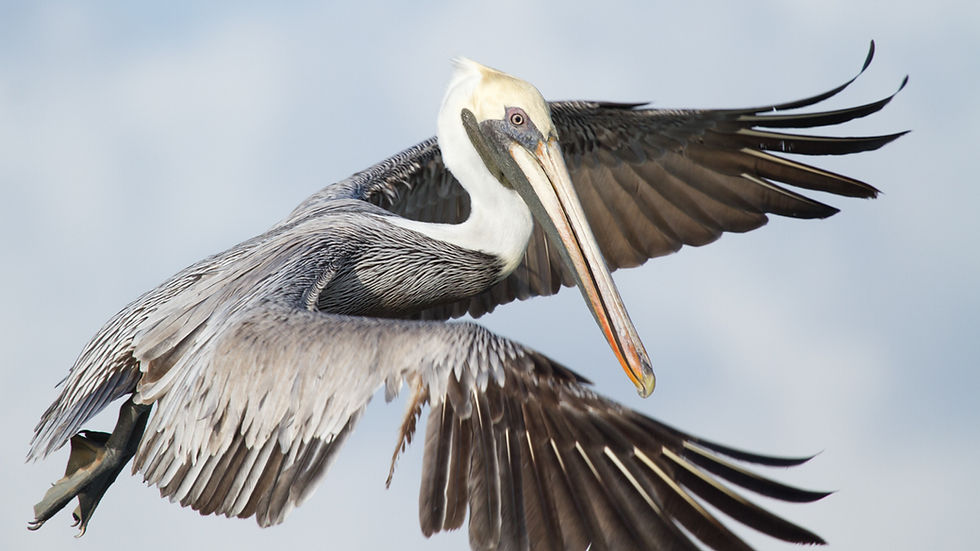
Birds in flight are never straightforward. It took me many years to perfect my technique, undoubtedly made easier with the eventual introduction of AI-powered autofocus systems many years later. In my early days of photographing birds, I had to ensure the bird's eye remained under my static focal point.
Behaviour Predictions (2013)

In January 2013 I attended a three-day bird photography workshop facilitated by the world-renowned Arthur Morris, from whom I had – at the time – gleaned the vast majority of my theoretical knowledge about bird photography. Conditions were chilly, I rented muck boots to help with the cold but they weren't much help keeping my footing on an icy, rocky jetty. I rented a 500mm f/4 lens from Art Morris for the workshop and nearly dropped it on the first day and nearly fell while holding it on the second day. Thankfully, the lens survived, and it was from that experience I knew that was the lens for me. Four years after that workshop, Art Morris shared this blog post in which he detailed a suggestion I made regarding his composition. I was thrilled that one of the traditional greats of the genre thought that highly of me.
Golden Hour (2013)

On the second morning of that workshop, I saw for the first (and only) time, a green flash at sunrise. I was in position on the beach before dawn, observing the changing sky, so my eyes were already on the horizon when I saw the flicker. Lucky that the conditions were right for it, and thankful that I was looking. Higher latitudes meant an actual golden hour, and not the golden five minutes I was accustomed to back home in the tropics.
Fear (2013)

A Long-winged Harrier made a low pass over a flock of migratory Dickcissels, sending them into a frenzy.
Two Worlds (2013)

Although I've never been much of a landscape photographer, making images like these were still something I'd occasionally dabble in. This particular image on the east coast of Trinidad was made in the pre-dawn using the now-obsolete HDR technique of combining three differently exposed frames.
Sooty Tern (2013)

Gradually, I was getting better at catching birds in flight. This image of a Sooty Tern from the top of Little Tobago ultimately landed up as the back cover photo for Casual Birding in T&T.
Porcupine (2013)

Sightings of mammalian fauna in T&T are typically sparse, and this remains the one and only time I have ever seen a wild Brazilian Porcupine. The light was low in the understory and the porcupine was on the move, luckily I managed a single usable frame.
Spectacled Caiman (2013)

This eye-level photo of a Spectacled Caiman landed me my first international feature, in Yahoo! Travel.
Southern Tamandua (2013)

I was thoroughly embracing my dream of being a wildlife photographer in 2013, after the porcupine sighting there was another one-off in the form of this Southern Tamandua. This anteater is nocturnal and arboreal, few people encounter one on the ground like this – in daylight! Its poor eyesight meant that as long as I continued laying quietly on the leaf litter, it would remain unbothered. After sniffing around and scratching a bit, it slowly moved off into denser vegetation. This image has since been printed several times and remains one of my favourites.
Garden Spider (2013)

From the start, I wanted to photograph all things wild, and I didn't pass up any opportunity to further expand my horizons – whether in subject or in technique.
Cutting Colours (2013)

There comes a time when one must begin breaking the rules. Once one learns how to properly use a tool, it is time to play with it. The distinctive silhouette of this Black Skimmer helped to make this image of it skimming a river in the pre-dawn more than usable.
Leaf Anole (2013)

For a time, I'd catch lizards and place them on a log to photograph them. Being cold blooded, they'd tend to stick around long enough for me to fire off a few frames at least. Eventually, I started to think about the whole process from the perspective of the lizard, and I stopped grabbing them.
Fluoresce (2013)

At the BioBlitz in 2013, I managed to photograph several critters I would otherwise have little opportunity with. This scorpion was one of them, so was a velvet worm and my first ever Fer de Lance.
Utishta (2013)

Those who know me well would know that I am also a hobbyist musician. This image ended up being used as the album cover for the debut of Spectral Vibes.
Golden Ratio (2013)

Photographing birds in sunlight was straightforward enough to allow me to experiment with different compositional guidelines. I was so thrilled with how this particular image turned out, matching the golden spiral so precisely that I currently use it when I'm teaching composition in photography.
Fer de Lance (2013)

After belly-crawling under a fallen tree that was blocking the trail halfway up Trinidad's second highest peak, I emerged to find this sizeable specimen comfortably curled up on a mountain fern. While I had my first encounter with this feisty viper during the BioBlitz only a couple months prior, this was my first adult Fer de Lance.
Scarlet Ibis Vortex (2014)

I had practiced zoom blurs before, but I never had the opportunity to apply this technique to birds with reasonable results. Scarlet Ibis and a few Black-necked Stilts in the mangrove one morning gave me one such chance. They were distinctive enough, and the light was favourable. Most of the images ended up in the bin, of course, but this one stood out.
Tufted Coquette (2014)

February 2014 was the first time I was entrusted to guide a group of visiting birders – I was only guiding couples prior to this. On that tour, we enjoyed crippling eye-level views of a perched Tufted Coquette, I remember taking turns to photograph it as it sat comfortably for quite a long time. This remains one of my most well-known images, not only as the cover photo for Casual Birding in T&T but also in a few other publications.
Small World (2015)

The willingness to photograph everything was partly driven by curiosity, and when I saw a huge praying mantis land on top a moth trap, I knew it was time for action. Its first lunge wasn't successful, but its second was. This image was featured in BBC's "Small World" series, along with the following image that was coincidentally made the following morning at the same location.
Shooting Into The Light (2015)

This "monkey brush" tree (Calliandra sp.) was lit from the opposite side by the rising sun. I was on a trip with a few other naturalists who were also photographing a few species of hummingbirds that were feeding from the flowers. They were all on the "textbook side" of the tree, i.e. with the sun at their backs. Light was even, colours were bright, and they wondered what I was doing on the other side. I was exposing for the light passing through wings and flora while balancing the shadows using fill-flash; others would say I was experimenting.
So Many Birds (2015)
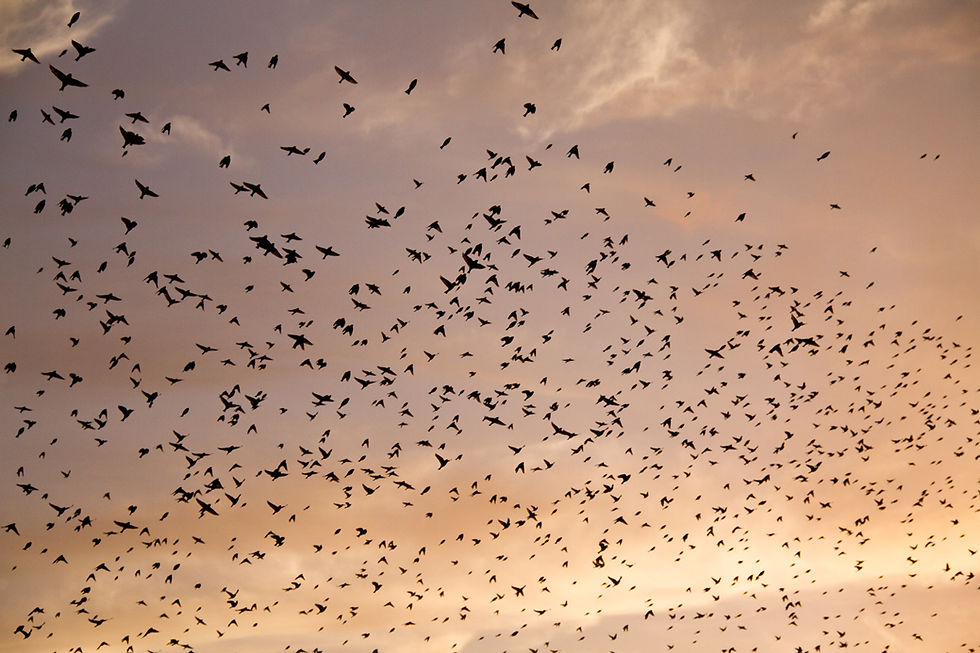
Photographing flocks of several thousand migratory Dickcissel was a self-inflicted assignment that pushed through the rigid boundaries of traditional bird photography. I learned their habits, I knew the type of image I wanted, and I went for it. This methodology is not how I typically photograph birds, but it remains a vital part of my toolkit.
Another Facet of the Journey Opens (2015)

As 2015 drew to a close, another idea was birthed: calendars. Featuring birds, of course. Currently, we are preparing the twelfth edition of this 11"x17" wall hanger. This Western Cattle-Egret was a member of that first flock of twelve.
Crapaud (2015)
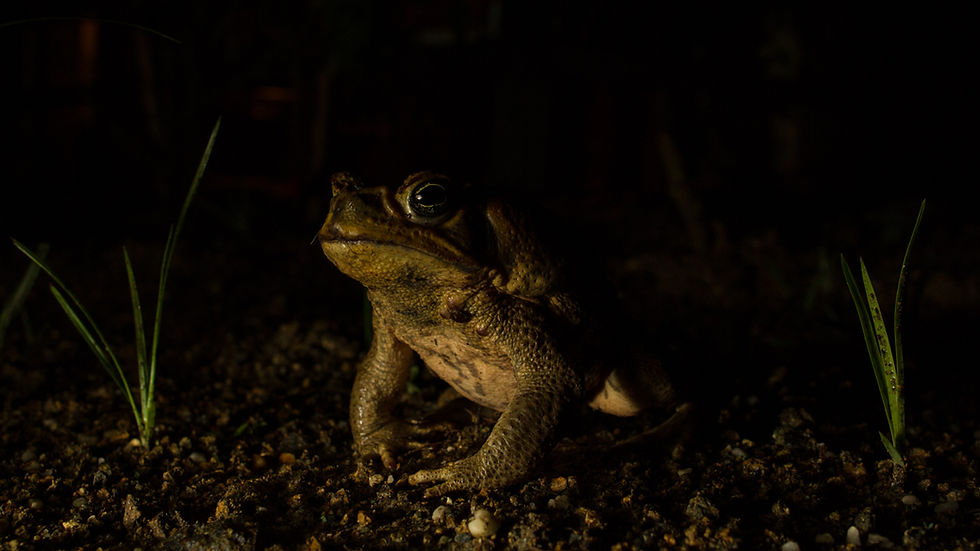
I remember speaking with a friend of mine about another photographer's work whose work she was over the moon for. In that conversation, I remarked that the animals being photographed were all already charismatic, cute, or otherwise appealing. I felt that a photographer's merit should also lie in pleasantly depicting animals that don't fall in favour of many. All animals told stories, and they should be rendered as interestingly as they actually are. Is this the best photograph of a Cane Toad? Surely not. But does it show its character? I'm certain it does.
Alien World (2016)

2016 found me without a working telephoto lens – it would only work with the 1.4x teleconverter attached, manual focus only. That entire year of supposed hardship served me well in manually focusing under a wide variety of conditions, photographing all manners of animals.
Corbeaux (2016)

To this day, I am still continuously exploring options to photograph birds using a shorter focal length. A gentle approach helps, but what works even better is to have the animals approach you. I haven't photographed many birds at 24mm, but I've used this focal length with vultures a few times.
I remain grateful to you for being a part of this journey. Moreover, I'm thankful for the journey itself, for the time that was taken in deliberate learning, for the obstacles along the way, and of course, for the experiences! These images are all part of my history, since then there have been many other forks in the road, sabbaticals taken, and fresh aesthetics that have taken residence in my toolkit. My editing workflow has also changed, further to this, after shooting with semi-pro cameras for thirteen years I finally upgraded to a couple of professional bodies in 2023. The advances in technology have definitely made certain tasks easier, but I have not forgotten where I came from.


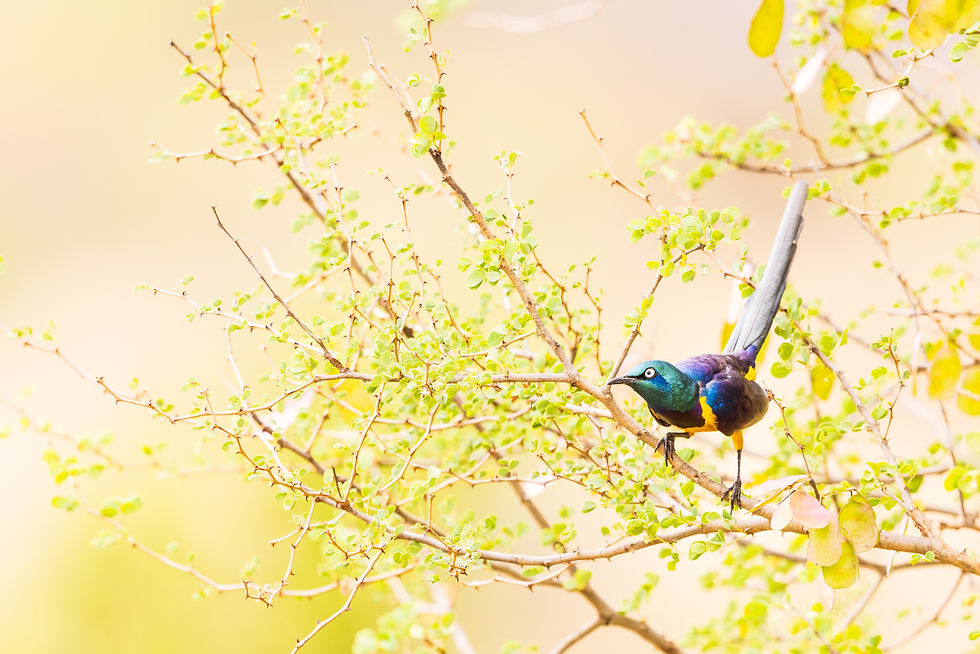
Epic! Thanks 🙏🏽 sharing Faraaz! Here’s my Yashica roots (happily dating myself) :
The Yashica T4 is one of the most
famous 35 mm point-and-shoot
film cameras ever made, celebrated
for its razor-sharp Carl Zeiss Tessar
35mm f/3.5 lens.